
Greenplac invests 120 million in forests and coated MDF
Share
The city of Água Clara, 200 kilometers from Campo Grande, was once again chosen as the setting for a significant new investment in the industry of Mato Grosso do Sul. Greenplac, a company that manufactures MDF panels, will invest R$ 120 million to expand its production. The company had announced an investment of R$ 70 million earlier this year and is now announcing a new investment of R$ 50 million to increase its production capacity of coated MDF, with the completion of works expected by 2026. The proposal is to increase the manufacturing of wood-patterned sheets — those that imitate natural wood and are widely used in furniture and decoration.
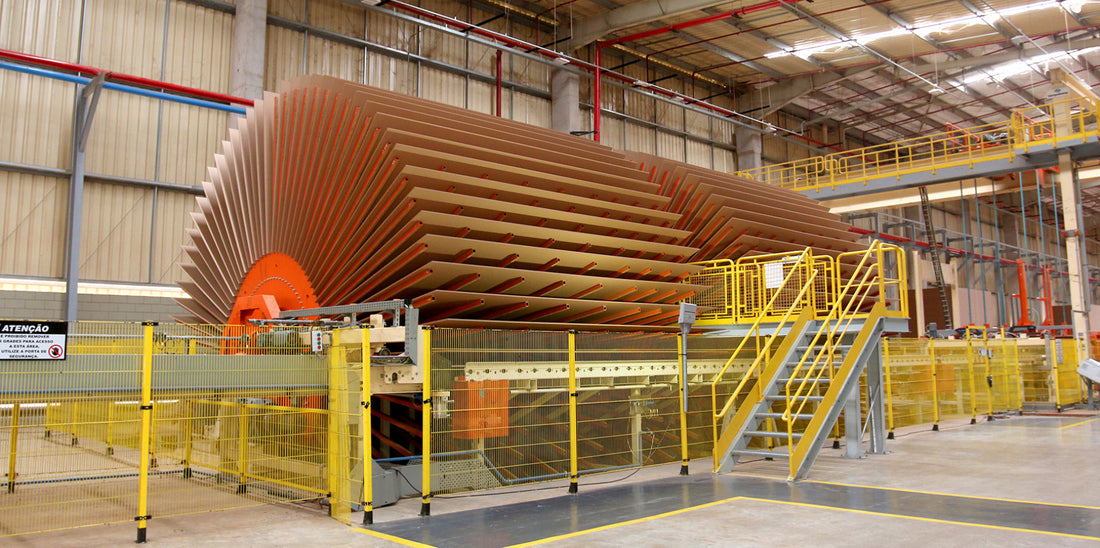
The factory, already modern and equipped with German technology, aims to double its capacity to 20,000 cubic meters of production per month. The plan is clear: to take advantage of strong sales, especially in the Central-West region, and consolidate the region as a national reference in the so-called “cellulose route.”
Since starting operations in 2018, Greenplac has already invested more than R$ 1 billion in the State, including its industrial plant, planted forests, and environmental certifications. According to the company, the current investment is another step in a sustainable and planned growth strategy.
“This investment is a response to the work done since the beginning of our operation. The growth of the brand among customers and the acceptance of our products consolidate our commercial strategies safely and transparently,” stated executive director Valmir de Souza.
According to him, the strong performance of wood-look MDF lines, known as wood patterns, is the main reason for this new phase. This year alone, sales of this type of product grew by 15% nationwide and 53% in the Central-West region.
MDF with an eye on the future - MDF panels, widely used by carpenters and planned furniture stores, are part of the daily lives of those furnishing or renovating a home. But behind these smooth or textured sheets lies a complex industry, involving forest planting, logistics, technology, and design. And Greenplac is betting on this complete chain for sustainable growth.
The R$ 120 million investment will enable the creation of new production lines, greater delivery capacity, and, of course, more jobs for the region. The project is expected to boost local suppliers, transportation, maintenance, and even workforce training.
With a consolidated presence in the national market and an eye on new opportunities, the company also aims to expand its sales channels and invest in a more varied portfolio. The idea is to cater to everyone from large manufacturers to smaller stores and carpentry shops across Brazil.
Commitment to the State - The announcement reinforces Mato Grosso do Sul's position as one of the main destinations for industrial investments in the country. The so-called “cellulose route,” which brings together companies linked to wood and paper, has been growing year after year, and Água Clara has stood out as one of its strategic points.
Context of Investments in Brazilian Industry:
Greenplac's investment aligns with the resumption of investments in the Brazilian industrial sector, which has registered significant figures in recent years. According to data from the National Confederation of Industry (CNI), industrial investments in Brazil in 2024 reached approximately R$ 150 billion, with a focus on manufacturing and capital goods sectors. Greenplac, which has already invested more than R$ 1 billion between 2016 and 2022, continues to contribute to this scenario with annual contributions of R$ 70 million for forests, expansions, certifications, and new technologies, consolidating its operation as one of the most modern in the country.
Greenplac is considered one of Brazil's most modern operations, with clean production, a focus on sustainability, and good industrial practices. The company plants its own forests, uses renewable energy, and holds environmental certifications that allow it to sell to more demanding markets.