

GREENPLAC facing COVID 2019
The new coronavirus pandemic is the world's biggest challenge in a century, and since the beginning of the year, international and national authorities have been working to save lives, ensuring healthcare, and the Asperbras Group has adapted its factories to this reality.
The Group is committed to the well-being of its employees, and therefore, all its companies – including GREENPLAC – are strictly following the guidelines and precautions recommended by the World Health Organization (WHO) and the Ministry of Health.
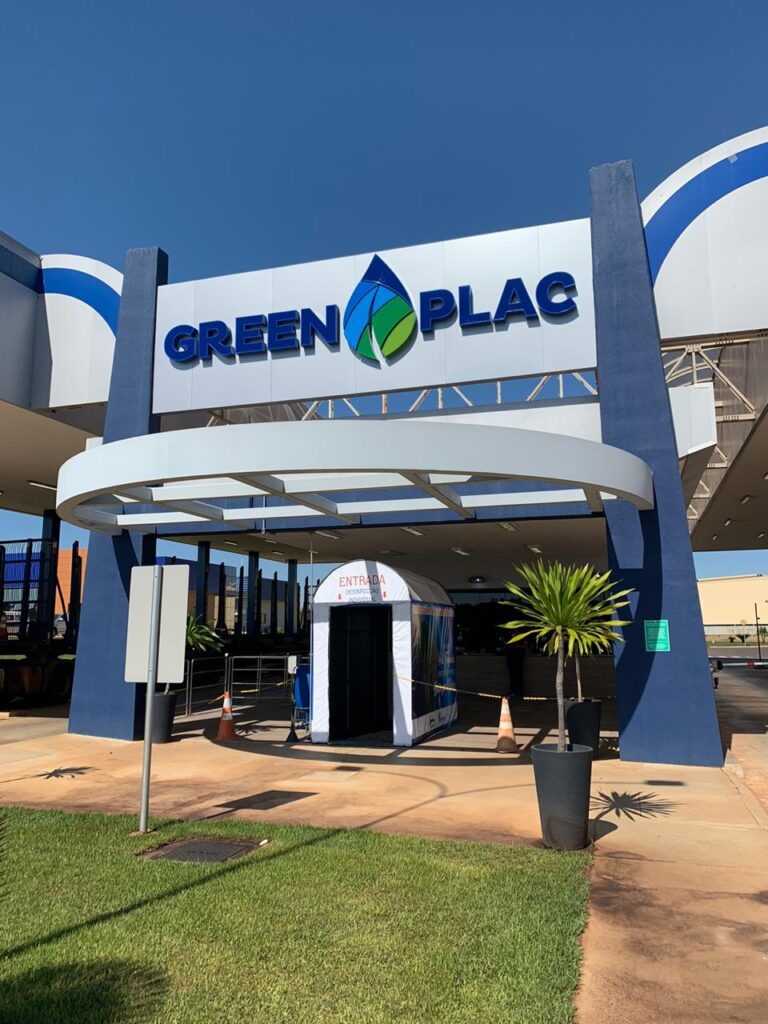
At GREENPLAC, work shifts have been altered to avoid crowds:
* A distance of 2 m² was established between employees when transportation to the factory is provided;
* Entry for third parties was prohibited;
* Tables in the cafeterias were arranged to be individually separated with a minimum distance of 1.5 m²; and
* Employees with banked hours or on vacation stayed home.
* The practice of measuring the temperature of all employees upon arrival at the factory and office was adopted.
* Hand sanitizer was made available in all areas for hand hygiene.
After extensive research, the company also invested in a Complete Spray Disinfection Booth. Installed at the factory entrance, the booth sprays ATOMIC 70 Antiseptic, authorized and registered with ANVISA for human use. With automatic activation via a presence sensor, the product used is biodegradable, does not irritate skin or mucous membranes, and provides excellent coverage and spraying.
In addition to preventive measures, the company uses internal newsletters to raise employee awareness. In internal communications, we reinforce the following measures:
1. Wash your hands frequently. Use soap and water or an alcohol-based gel (70%).
2. Do not touch your eyes, nose, or mouth.
3. When coughing or sneezing, cover your nose and mouth with your bent elbow or a tissue.
4. If you are unwell, stay home.
5. If you have a fever, cough, or difficulty breathing, seek medical attention.
6. Follow the instructions of local health authorities.